More than one billion people worldwide and nearly 40 million Americans live with migraine. Far more than “just a headache,” migraine is one of the leading causes of disability worldwide, affecting work productivity, family life, physical activity, and overall quality of life.
For decades, migraine was viewed primarily as a vascular disorder. Today, researchers recognize migraine as a complex neurological condition involving the brain, nervous system, sensory processing pathways, genetics, environmental triggers, and musculoskeletal influences. Yet despite advances in our understanding of migraine, many patients continue to ask a simple question:
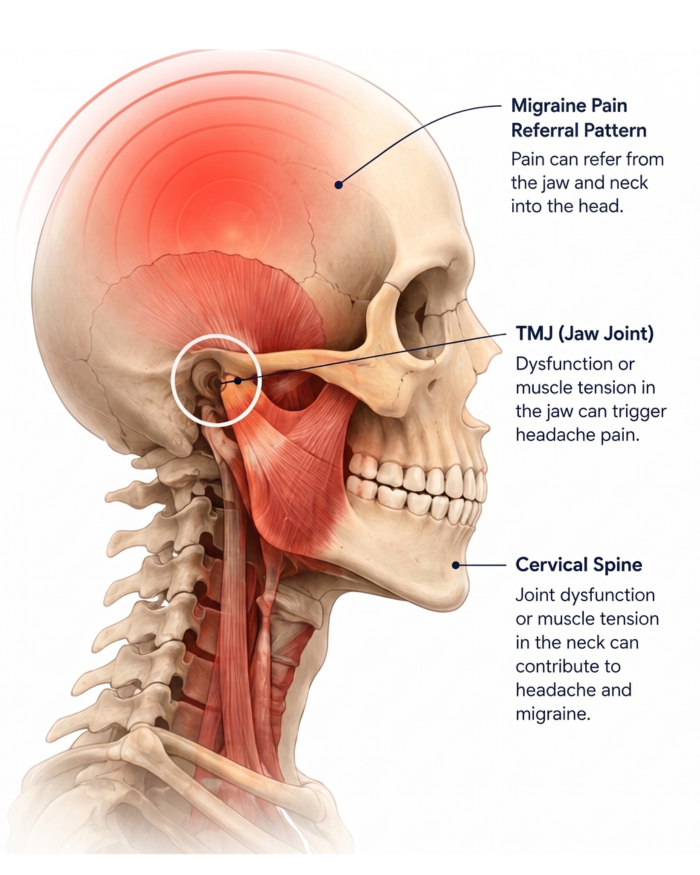
One area receiving increasing attention is the relationship between migraine, temporomandibular joint (TMJ) dysfunction, and disorders of the cervical spine. Patients suffering from migraine frequently report accompanying symptoms such as jaw pain, teeth grinding, facial tension, neck stiffness, pain behind the eyes, and tenderness at the base of the skull. These symptoms are often viewed as separate problems, but anatomically and neurologically they may be closely connected.
The trigeminal nerve, which plays a central role in migraine, shares important connections with structures of the jaw, face, and upper cervical spine. As a result, dysfunction in one region may influence sensitivity and pain perception in another. This emerging understanding has led clinicians and researchers to look beyond the head itself and consider how the jaw, neck, posture, breathing patterns, sleep quality, and nervous system regulation may contribute to chronic headache and migraine disorders.
While migraine remains a complex condition with many contributing factors, a growing body of evidence suggests that evaluating the entire head, neck, and jaw system may provide important insights into why symptoms persist and how they can be better managed with physical therapy.
Understanding the connection between the jaw, neck, and head is an important step toward finding lasting relief. If you experience recurrent headaches or migraines, consider whether your jaw and neck may be part of the puzzle.